Saturday, January 18, 2014

Valuing Chapter Six

   Happy Friday people!!! Since it's Friday this post will be cute and short. As you can see by the post title, this is a post about chapter six : Valuing Organizational Information. Chapter six is about organizational information, the value of transactional information, analytical information timely information and quality information. So basically this chapter is about the types of information in Information Technology in Business. It's not a long chapter just a short one so I hope you'll read it.

   The first thing you have to know is that information is everywhere in an organization. Each employees must be able to obtain and analyze the many different levels, formats and granularity of organizational information to make decision. Here is a pyramid to show you the example.


   Meanwhile transactional information encompasses all the information contained within a single business process or unit of work, and its primary purpose is to support performance of daily operational task. On the other hand, analytical information encompasses all organizational information, and its primary purpose is to support the performing of managerial analysis tasks.


   Timeliness is an aspect of information that depends on the situation such as real time information which is immediate and up to date information. It uses real time system that provides real time information in response to query request. On the other hand, business decisions are only as good as the quality of the information used to make the decisions. To get high quality information it must be accurate, complete, consistent, unique and timeliness.


Example of low quality information


There are many consequences of having poor quality information to the company such as  marketing to non-existing customers, difficulty tracking revenue due to inaccurate invoices and inability to build strong customer relationships. The reason why there are low quality information are because online customers intentionally enter inaccurate information to protect their privacy, information from different systems have different entry standards and formats and call center operator enter abbreviated or erroneous information by accident or to save time. Therefore it is vital to have high quality information so that it can improve the chances of making a good decision as good decisions can have a huge impact on the company.


Friday, January 10, 2014

Organizing Chapter Five


 For this chapter I'm posting my blog early because this chapter is a short one. So, for chapter five : Organizational Structures that Support Strategic Initiatives, it consist of knowing the chief officers that are vital to IT such as Chief Information Officer, Chief Security Officer, Chief Technology Officer and many more. We also learnt about the difference of IT people and Business people, I didn't even realized that there is a different between those two or maybe I did. Then there's ethic and security discussion.

   There are a few important role or position that are related to IT:
  • Chief Information Officer, who oversees all uses of IT and ensures the strategic alignment of IT with business goals and objectives. CIO function as a leader, communicator and a manager.
  • Chief Technology Officer, who is responsible for ensuring the throughput, speed, accuracy, availability, reliability of IT.
  • Chief Security Officer, responsible for ensuring the security of IT system.
  • Chief Privacy Officer, responsible for ensuring the ethical and legal use of information.
  • Chief Knowledge Officer, responsible for collecting, maintaining and distributing the organization's knowledge.


   Did you ever notice the difference between It people and Business people? Well there is few difference between these two such as IT people are good with technologies while Business people are good in marketing, sales, accounting etc. In this situation, there is gap between these type of people so how do suggest we eliminate this gap? Well by improving communication, in other words Business people must learn IT and IT people must learn Business. The Chief Information Officer is responsible to ensure the effective communication amongst these two.  

  Ethics and security are both important building blocks that organizations must base their business on to be successful. Ethics is the principles and standards that guide our behaviour toward other people. Some of the issues that arise due to technology advance are intellectual property (intangible creative work that is embodied in physical form), copyright (the legal protection afforded an expression of an idea), fair use doctrine (in certain situations, it is legal to use copyrighted material), pirated software (the unauthorized use, duplication, distribution or sale of copyrighted software) and counterfeit software (software that is manufactured to look like the real thing and sold as such.
Security is need to protect organizational information cause it is intellectual capital. Information security is the protection of information from accidental or intentional misuse by persons inside or outside and organization. 


   Thank you for reading!!!


AirAsia - Now Everyone Can Fly Case Study.


1) Identify five (5) of competitive advantages used by AirAsia.
  • Pioneered low cost traveling in Asia. 
  • The first airline in the region to implement fully ticketless travel and unassigned seats.
  • Operates with the world's lowest unit cost.
  • Has a crew productivity level that is triple that of Malaysia Airlines and achieves an average
    aircraft utilization rate of 13 hours a day.
  • AirAsia has a crew productivity level that is triple that of Malaysia Airlines and achieves an average aircraft utilisation rate of 13 hours a day.


2) Which of the Porter's generic strategies were applied by AirAsia in the case study and explain with examples.


  • AirAsia applied the focused strategy which concentrate on differentiation. This is said because it is also the first airline in the region to implement fully ticket-less travel and unassigned seats. Futhermore, AirAsia pioneered low cost travelling in Asia and operates scheduled domestic and international flights and is Asia's largest low fare.


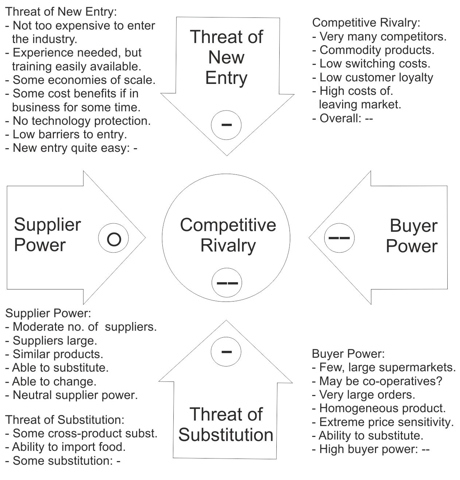
3) Based on Porter's Five Force Model, analyze AirAsia's buyer power and supplier power.

  • Buyer Power
In this situation, the buyer power is high due to buyers having many choices whom to buy from. The buyers can purchase low fare tickets from various airline that offer low cost fare such as Lion Air, Jet Star and many more.

  • Supply Power
The supply power is low due to buyers having many choices to choose from. Since AirAsia is not the only airline that offer low cost fare, its supply power is low as customer can choose which airline they would like to fly with that offer the same or cheaper price than AirAsia.

Wednesday, December 25, 2013

Measuring Chapter Four

            Good day dear readers. I hope you are healthy always. Thank you for continuing reading my learning journal, I appreciate it so much. In this post, I would like to share with you guys and gals the fourth chapter of what we have learnt, which is *drum rolls* Measuring the Success of Strategic Initiatives. Okay, I know some of you are cringing and have your eye brow raised, fear not! I’m here to tell you the story of this complex (it’s not so complex, really) topic. All you have to do is read and understand, I’m sure you’re able. Anyhow, I feel like I’m babbling so much now so how about we get started. In this topic we (‘we’ as in my class) learnt about the efficiency IT metrics and effectiveness IT metrics (don’t get confused with these two), the common types of efficiency IT metrics, the types of effectiveness IT metrics and what is customer metrics and their importance to an organization. It’s not that complex, right? J

Efficiency IT Metrics? Effectiveness IT Metrics? Benchmarking? What?

            In this topic, the two terms you must remember and not get confuse is efficiency IT metrics and effectiveness IT metrics. Can you see the difference? The first one is efficiency while the second is effectiveness, remember that. Efficiency IT metrics by definition means the measurement of the performance of the IT system itself including throughput, speed, and availability. Meanwhile, effectiveness IT metrics means measurement of the impact IT has on business processes and activities including customer satisfaction, conversion rates, and sell-through increases. Moving on, it doesn’t really matter what is being measured, how it is measured and if it is for efficiency or effectiveness, there must be benchmarks or a baseline values the system wants to achieve. What is benchmark you ask? Benchmark is a process of continuously measuring system results, comparing those results to optimal system performance, and identifying steps and procedures to improve system performance.


The Many Types of Efficiency IT Metrics and Effectiveness IT Metrics

            Efficiency IT metrics are easier to measure and monitor than effectiveness metrics as it monitors technology. The types of efficiency IT metrics are as below.


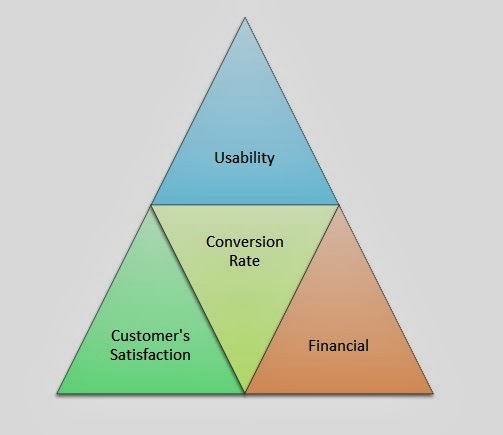
            While efficiency is easier to measure, effectiveness however is a little bit complicated to measure. Why? Because how do you measure customer’s satisfaction? The ways that a company measures the effectiveness are by:


Metrics for Strategic Initiatives

            Metrics for measuring and managing strategic initiatives consist of:


 Web site metrics.

·         Abandoned registrations
·         Abandoned shopping cards
·         Click-through
·         Conversion rate
·         Cost-per-thousand
·         Page exposures
·         Total hits
·         Unique visitors


 Supply chain management (SCM) metrics

·         Back order
·         Customer order promised cycle time
·         Customer order actual cycle time
·         Inventory replenishment cycle time
·         Inventory turns (inventory turnover)


 Customer relationship management (CRM) metrics

·         Sales metrics
·         Service metrics
·         Marketing metrics

Business process reengineering (BPR) metrics


Alright guys and gals! That is all for today, thank you so very much for joining me. Visit soon!!


Tuesday, December 17, 2013

Processing Chapter Three

   Greeting and salutation. How is everyone doing? I hope you are doing well wherever you may be. Let us get started with the third chapter, shall we? Well, we have learnt about Strategic Initiatives for Implementing Competitive Advantages. In this topic we were taught about the four basic components of supply chain management (SCM), the customer relationship management (CRM) systems and how they can help organizations understand their customers, the importance of enterprise resource planning (ERP) systems and lastly, how an organization can use business process reengineering (BPR) to improve its business. This chapter interest me because it has taught me about the strategic initiative used by companies all around the world and it helped me understand how an organization can gain its competitive advantages and business efficiencies.


Supply Chain Management (SCM)


   Supply chain management involves the management of information flows between and among stages in a supply chain to maximize total supply chain effectiveness and profitability. Dozens of steps are required to achieve and carry out each of the preceding components. SCM software can allows an organization to generate efficiencies within these different supply chain components. Here are the four basic components are:

Supply chain strategy – strategy for managing all resources to meet customer demand.

Supply chain partner – partners throughout the supply chain that deliver finished products, raw materials, and services.

Supply chain operation – schedule for production activities.

Supply chain logistics – product delivery process.


Customer Relationship Management ( CRM)


   This strategy involves managing all aspects of customer’s relationship with an organization to increase customer loyalty, retention and organization profitability. This strategic allows an organization to gain insights into customer’s shopping and buying behaviours in order to develop and implement enterprise-wide strategy. The CRM system can be seen as below.


Business Process Reengineering (BPR)


   Alone, business process means a standardized set of activities that accomplish a specific task, such as processing a customer’s order. However, Business process reengineering means the analysis and redesign of workflow within and between enterprises to make all business processes best in class. BPR highlights the classical belief that there is only one best way to conduct tasks. Unfortunately, BPR has it’s pitfall which is the company becomes so wrapped up in fighting its own demons that it fails to keep up with its competitors in offering new products or services.


                                                       The seven principle of Business Process Reengineering.


Enterprise Resource Planning ( ERP)


   ERP integrates all departments and functions throughout an organization into a single IT system so that employees can make decisions by viewing enterprise-wide information on all business operations. In the ERP systems, it collects data from across an organization and correlates the data generating an enterprise-wide view.


  Thank you so much for reading this long as post. Have a great day ahead!!


Tuesday, December 10, 2013

Past Year Questions

March 2012

Part A

The four common information sharing cultures include information-functional culture, information-sharing culture, information-inquiring culture and information-discovery culture.
True

An entry barrier is typically used to influence the rivalry among existing competitors.
False

Part B

What is a field concerned with the use of technology in managing and processing information?
Information Technology.

Which of the following represents the order of priority for the three primary organizational key resources?
Information, information technology, people.

What refer to application and technologies that are used to gather, provide access to and analyse data and information to support decision-making effort?
Business intelligence

What is the acquisition and analysis of events and trends in the environment external to an organization?
Environmental scanning

All of the following are common tools used in industry to analyse and develop competitive advantages, except;
Competitive analysis model

Part C

Porter’s Five Forces Model is one of common tools used in industry to analyse and develop competitive advantages. List and describe each of the five forces in Porter’s Five Forces Model.

Buyer Power – the ability of buyers to affect the price they must pay for an item. The buyer power is high when buyers have many choices of whom to buy from and low when their choices are few.

Supplier Power – consist of all parties involved, directly and indirectly in obtaining raw material or a product.

Threat of Substitute Product or Services – it is high when there are many alternatives to a product or service and low when there are few alternatives from which to choose.

Threat of New Entrant - high when it is easy for new competitors to enter a market and low when there are significant entry barriers to entering a market.

Rivalry among existing competitors – it is high when competition is fierce in a market and low when competition is more content


October 2012

Part A

Information technology (IT) is a field concerned with the use of technology in managing and processing information.
True

Information discovery culture encourages employee to search for information to better understanding the future and align themselves with current trends and new direction.
False

Part B

Management Information System (MIS) can be defined as:
A general name for the business function and academic discipline covering the application of people, technologies and procedures to solve business problems.

Applications and technologies that are used to gather, provide access to and analyse data and information to support decision making efforts refer to:
Business intelligence.

Part C

Explain four organizational information cultures.

Information-Functional Culture: Employees use information as a means of exercising influence or power over others.

Information-Sharing Culture: Employees across departments trust each other to use information (especially about problems and failures) to improve performance.

Information-Inquiring Culture: Employees across departments search for information to better understand the future and align themselves with current trends and new directions.

Information-Discovery Culture: Employees across departments are open to new insights about crisis and radical changes and seek ways to create competitive advantages.

Describe three Porter Generic Strategies. Support your answers with example.

Cost leadership: The business strategy is to be low cost provider of goods for the cost conscious consumer. For example, Walmart that offers a broad range of goods at low prices.

Differentiation: Its business strategy offers a variety of specialty and upscale products to affluent consumers. For example, Neiman Marcus competes by offering broad range of varieties of products at high prices.

Focused strategies: In this strategy it could go either offering specific product at low prices or a high cost provider of premier product to affluent consumer. For example, Payless shoes that offers specific product at low prices while Tiffany & Co offers variety of product such as jewellery at high prices.


March 2013

Part A

Data is information converted into meaningful and useful context.
False

An organization’s IT culture can directly affect its ability to compete in the global market.
True

Switching costs are costs that encourage customers to switch to another product or service.
False

Part B

What can IT enable an organization to accomplish?
Reduce costs, improve productivity and generate growth.

Organizational information cultures include:
Information-functional, sharing, inquiring and discovery culture.

Which of the following statement is true?
IT enables business success and innovation.


Digesting Chapter Two

  Good day everyone, at the last lecture we have completed the second chapter: Identifying Competitive Advantages. In this chapter we were explained why competitive advantages are typically temporary, described each five of the forces in Porter’s Five Forces Model, comparing all the generic strategies and described the relationship between business processes and value chain.  In order for a leader to run a company these days, the leader must ensure that all of his employee are heading in the right direction and completing their goals and objectives.

Identifying Competitive Advantages.

   From what I understand, competitive advantages are a piece of product or service that customer place a greater value than they do on similar offerings from competitor. Competitive advantages provide the same product or service either at a lower price or with added value that can fetch the best price. However, competitive advantages are typically temporary as competitors often seek ways to compete. Another advantage is First mover advantages which means when an organization can significantly influence its market share by being first to market with a competitive advantage. For example, FedEx created a first mover advantage by developing its customer self-service software that allows people to request parcel pickups and track parcels online. Other company quickly began building their own online company. Also, organizations watch their competition through Environmental scanning which means the acquirement and analysis of events and trends in the environment external to an organization.

The Five Forces Model

   In this model, it formally analyses the competitive forces within the environment in which a company operates to assess the possibility for profitability.


The Three Generic Strategies

Organization follows this strategic when entering a new market.

o   Broad market and low cost – The business strategy is to be low cost provider of goods for the cost conscious consumer.

o   Broad market and high cost – its business strategy offers a variety of specialty and upscale products to affluent consumers.

o   Narrow market and low cost – Offer specific product at low prices.

o   Narrow market and high cost – its business strategy allows it to be a high cost provider of premier product to affluent consumer.

Value Creation

Lastly, once an organization chooses its strategy, it can use tools such as the value chain to determine the success or failure of its chosen strategy.


Thank you for reading! Hope you enjoyed it and understood what I wrote. Till next chapter.